Symptoms vary

Types of Hernia: Inguinal, Umbilical & More Explained
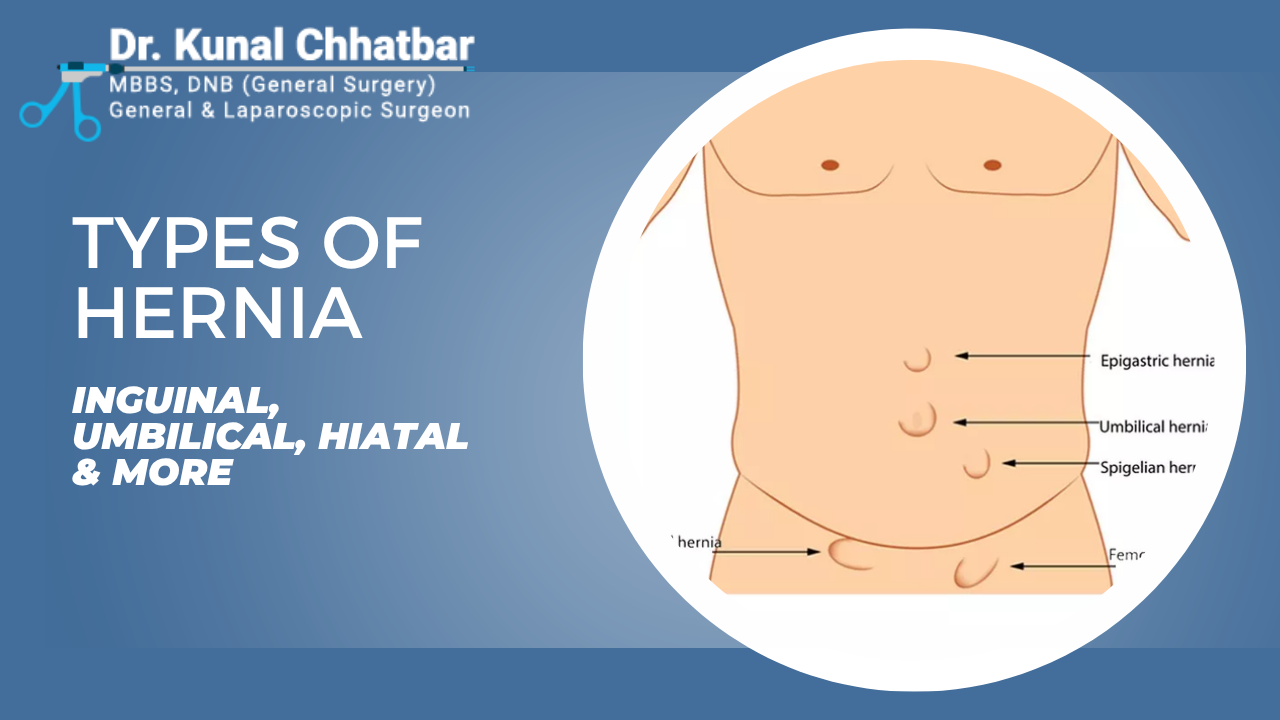
Not All Hernias Are the Same
When people hear the word “hernia,” they usually think of a simple lump in the abdomen.
But here’s what many patients don’t realize:
There are several different types of hernias—and each behaves differently.
Some develop in the groin.
Some appear near the belly button.
Others may not even cause a visible bulge.
Understanding the type of hernia is important because:
-
-
Risks are different
-
Treatment approach changes
Let’s break down the most common types in a simple and patient-friendly way.
First, What Exactly Is a Hernia?
A hernia occurs when an internal organ or tissue pushes through a weak area in the muscle wall.
Think of it like:
Pressure pushing through a weak spot in a tire.
This can happen due to:
-
Weak muscles
-
Heavy lifting
-
Chronic coughing
-
Obesity
-
Previous surgery
-
Aging
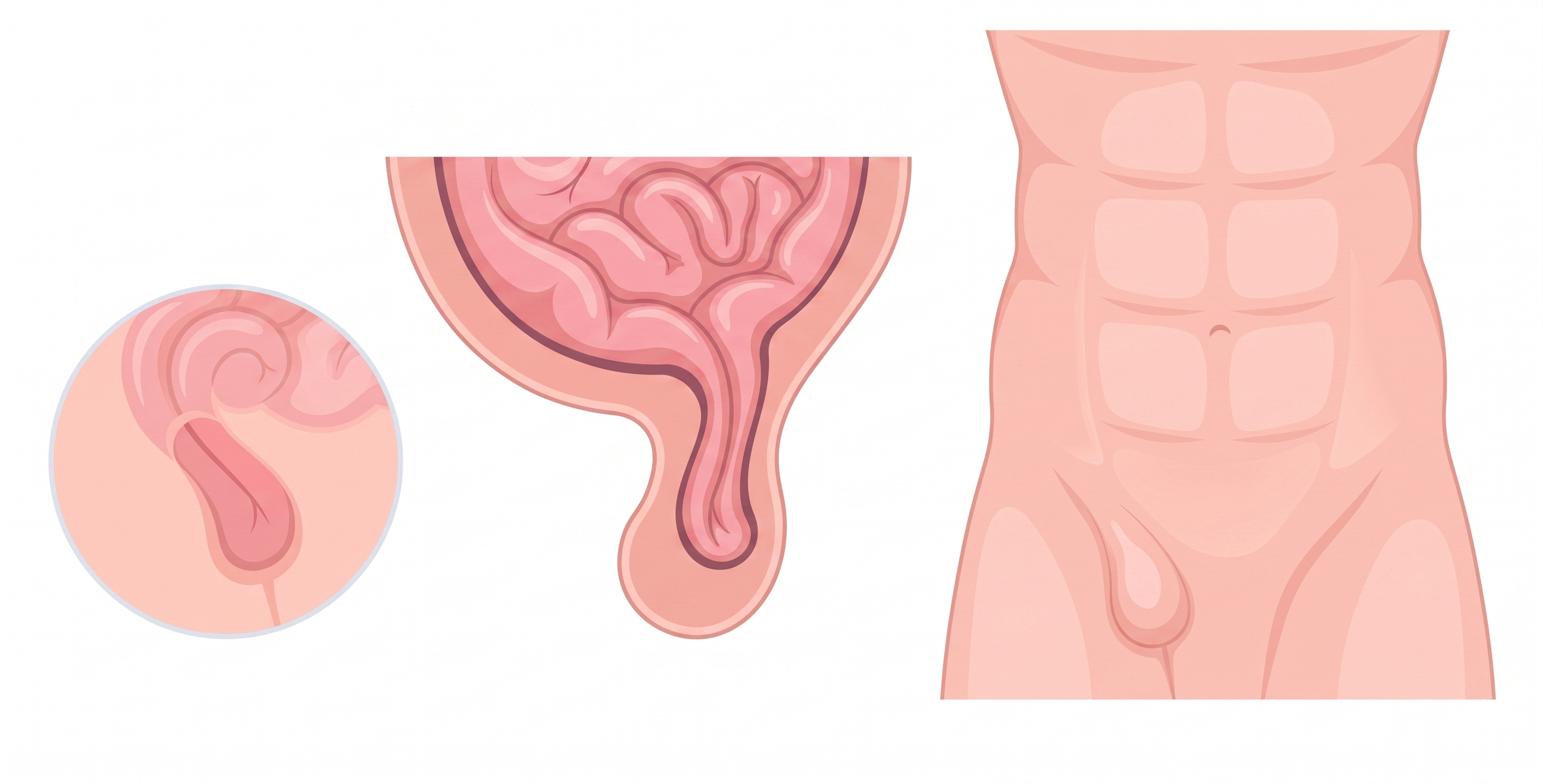
1. Inguinal Hernia (Most Common Type)
This is the most common hernia seen in adults.
Where Does It Occur?
In the groin area.
It happens when tissue pushes through a weak spot in the lower abdominal wall.
Common Symptoms:
-
Bulge in the groin
-
Pain while lifting or coughing
-
Heaviness or pulling sensation
Inguinal hernias are more common in men.
Why It Shouldn’t Be Ignored
If untreated, it can become:
- Painful
- Enlarged
- Strangulated (emergency condition)
2. Umbilical Hernia
This type appears near the belly button.
Common In:
-
Infants
-
Pregnant women
-
Adults with obesity
Symptoms:
-
Soft swelling near the navel
-
Bulge becomes noticeable while coughing or straining
Some small umbilical hernias may remain painless for years.
When Treatment Is Needed
Surgery is usually advised if:
-
The hernia grows
-
Pain develops
-
It doesn’t reduce naturally
3. Hiatal Hernia
Unlike other hernias, this one is internal.
What Happens?
Part of the stomach pushes upward into the chest through the diaphragm.
Common Symptoms:
-
Acid reflux
-
Heartburn
-
Difficulty swallowing
-
Chest discomfort
Many patients mistake it for acidity problems.
4. Incisional Hernia
This type develops after previous abdominal surgery.
Why Does It Happen?
The surgical scar area becomes weak, allowing tissue to push through.
Risk Factors:
-
Obesity
-
Poor wound healing
-
Heavy lifting too soon after surgery
Important
Incisional hernias tend to increase in size over time.
5. Femoral Hernia
This is less common but more serious.
Location:
Upper thigh/groin region.
More Common In:
Women, especially older women.
Why It’s Dangerous
Femoral hernias have a higher risk of:
- Strangulation
- Emergency complications
Early treatment is very important.
6. Epigastric Hernia
This occurs in the upper abdomen between the chest and belly button.
Symptoms:
-
Small lump
-
Mild pain or tenderness
Some patients only notice discomfort while exercising or straining.
Which Hernia Is the Most Dangerous?
Any hernia can become serious if ignored.
But the highest-risk types usually include:
-
Femoral hernia
-
Strangulated inguinal hernia
Early diagnosis significantly reduces complications.
Why Hernia Type Matters for Treatment
Different hernias require different treatment approaches.
For example:
-
Small hiatal hernias may be managed with medication initially
-
Large inguinal hernias usually require surgery
Accurate diagnosis is the key to effective treatment.
Modern Hernia Treatment Options
Today, hernia treatment is safer and more advanced than ever.
Laparoscopic Hernia Surgery
-
Smaller cuts
-
Faster recovery
-
Less pain
Open Hernia Surgery
-
Suitable for complex cases
-
Effective for larger hernias
The best treatment depends on the type and severity of the hernia.
When Should You See a Specialist?
Many patients wait until pain becomes severe.
That’s a mistake.
Consult a doctor if you notice:
-
Any unusual bulge
-
Groin discomfort
-
Persistent abdominal pressure
Early treatment is always simpler and safer.
Why Choosing the Right Specialist Matters
Hernia treatment requires proper evaluation and surgical expertise.
If you are searching for a trusted hernia specialist in Kandivali, consulting an experienced surgeon can help you:
- Get accurate diagnosis
- Understand the best treatment option
- Avoid complications
Dr Kunal Chhatbar offers advanced evaluation and treatment for different types of hernia.
Frequently Asked Questions
Final Thoughts
Hernias may look similar from the outside, but different types require different treatment approaches.
Ignoring symptoms can lead to bigger complications later.
Understanding the type of hernia early helps ensure:
-
Safer treatment
-
Faster recovery
-
Better long-term results
Don’t Ignore the Signs
If you notice a bulge, discomfort, or abdominal pain:
- Consult Dr Kunal Chhatbar for expert evaluation and treatment
- Get advanced care from a trusted hernia specialist in Kandivali
Early diagnosis can prevent complications and simplify recovery.
 Call Us
 WhatsApp